free website hit counter
What Happened to James Chasse

Wednesday, April 9, 2008

Portland police, firefighters unions mostly sitting out politics this year

The groups say they're frustrated with a general lack of respect from City Hall
From The Oregonian, April 9, 2008

Most election years, Portland's police and firefighters help play kingmaker, giving thousands of dollars and priceless get-out-the-vote help to a slate of carefully chosen candidates. This year, however, they're largely sitting it out.

They're fed up with the guys who currently occupy City Hall and frustrated by what they say is a general sense of disrespect.

For certain candidates, it's a real blow. Symbolically, what's better than appearing in a campaign ad or flier next to a firetruck? Practically, what candidate can't use the telephone banks and lawn sign parties both unions are well-known for?

"Not getting involved represents a dramatic response for both of our unions," said Robert King, a Portland detective and president of the Portland Police Association. "Part of what it indicates is that we would both like to see more support out of the people in leadership positions than what we've gotten. The people who work in public safety in this city do not feel respected or heard."

King's more than 1,000 members decided to endorse Nick Fish, Amanda Fritz and Commissioner Randy Leonard in the three city commissioner campaigns. They're staying mum in the race to replace Mayor Tom Potter, the first time in years they've chosen neutrality.

The cops say they've spent the past four years feeling scrutinized and painted as thugs by city leaders.

They point to the outraged responses among elected officials to the death of a mentally ill man named James Chasse Jr. in police custody in 2006, to the City Council's decision to end Portland's drug- and prostitution-free zones, to Potter's decision to fire a respected lieutenant in an on-duty shooting last year even though Chief Rosie Sizer recommended a lesser punishment.

"In this election, we really are hoping for a change," King said. "We hope for a group of people who are more understanding of what we're doing, who are more likely to look at the good work that so many of us do every day.

"In the mayor's race at least, it just seems like the best way to ensure that is to stay neutral."

Both major candidates for mayor, City Commissioner Sam Adams and travel business owner Sho Dozono, sat through endorsement interviews with the police, and King said there were things that union leaders liked about both of them. There are also things they worry about.

Adams has suggested that if elected, he might give control of the Police Bureau to someone else -- perhaps Leonard, a retired firefighter, something that intrigues union leaders. Adams has worked hard to be a friend to labor during his first term on the City Council, including working to stop Wal-Mart, famously anti-union, from building in Portland and devoting one part-time staff position to a labor relations expert.

But Adams can be abrasive and stubborn, as the union leaders know from watching him operate for more than a dozen years, during his time as a city commissioner and the decade he spent as Mayor Vera Katz's chief of staff.

Dozono has generally been on the pro-cop side of downtown safety issues as a leader in the Portland Business Alliance and its predecessors. But he's also new to government -- something of an unknown quantity, in other words -- and won the endorsement of Potter, the union's public enemy No. 1.

There's a certain irony there: Potter, after all, was a career police officer and retired as Portland police chief in 1992. Yet he was never beloved during his days in uniform and has made even fewer friends as mayor.

Four years ago, the police union endorsed Potter's opponent, Jim Francesconi, although the union rescinded that after Francesconi ran a radio spot criticizing Potter -- and, union members thought, the police as well -- for his handling of a disciplinary case.

Officers feel as if they've spent four years paying for the original Francesconi nod, King said.

Portland firefighters have a more specific grievance: They want a healthy raise.

Last year, the union's 680 members elected a slate of new leaders who ran on a promise to get them more money. The problem: City leaders have changed their approach to bargaining and say they've already conceded a lot in trying to get all the city's unions on the same contract schedule.

The new leaders among Portland's firefighters weren't part of those meetings and say their members have been underpaid for years compared with other departments in Oregon and elsewhere. At various points over months of negotiations, they've argued for a 3.5 percent, across-the-board pay increase -- on top of an annual cost of living increase -- a shorter workweek and higher overtime pay. The city has offered smaller raises and bonus pay for officers during shifts spent operating heavy machinery.

But the two sides haven't been able to craft a contract, and things have grown tense. The city and the union seem headed toward arbitration this summer.

So, the union's leaders opted not to endorse anyone this year. What, they decided, is the point? "There's really no reason we're going to arbitration except for poor communication," said Ken Burns, the union president. "We think, quite frankly, that's a commissioner's job."

Burns and his colleagues are even on the outs with Leonard, a former firefighter who ran the union before entering politics. Leonard said his endorsement interview with union leaders focused solely on the details of the contract and ended with both the candidate and his questioners feeling angry and insulted.

How will it end? Both unions still have plenty of time to change their collective minds.

In the meantime, the two mayoral candidates bear the stamp of approval from other labor unions: Adams got the nod from the Northwest Council of Laborers, and Dozono has the endorsement from the Carpenters Union Local 247.

Wednesday, March 19, 2008

Commitment Issues: Chasse Death Cited in Involuntary Detention

From the Portland Mercury, March 20, 2008

Multnomah County's commitment court ruled at the end of 2006 that an allegedly mentally ill woman should be locked in a psychiatric hospital, because it would be safer than wandering the streets like James Chasse — where the person risked being "beaten to death" by cops, according to the judge.

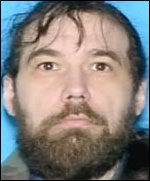
The Oregon State Appeals Court overturned the woman's involuntary commitment last Wednesday, March 12—and, in the process, revealed the judge's statements—saying Judge Lewis B. Lawrence (pictured) was wrong to draw the conclusion that the woman "was a danger to herself because some officer, at some unknown point in the future, might kill or harm her."

The woman, who was not named under commitment statutes designed to protect her confidentiality, had fought with police when she was originally taken into custody on a mental health hold.

Referring to this, the commitment court took "absolute judicial notice" of the fact that "fighting with police... is certainly something that puts mentally ill people at risk of death or serious physical injury," according to the appeals court verdict.

"The court commented on the then-recent death of James Chasse, stating that Chasse, an unarmed mentally ill person, 'was confronted by police, and he was beaten to death,'" the appeals court verdict continues.

Significantly, the commitment court took "absolute judicial notice" of Chasse's having been "beaten to death." In legal terms, a judge is only supposed to take judicial notice of a fact when it is obvious and undisputed.

Chasse, a schizophrenic, died following an altercation with police officers and sheriff's deputies on the corner of NW 13th and Everett on September 17, 2006, though the exact circumstances of his death are mysterious. His family is continuing to pursue a lawsuit against the City of Portland, Multnomah County, and the ambulance firm American Medical Response, who cleared Chasse for transport to jail.

Commitment verdicts are sealed from public scrutiny once they are made, unless they are overturned at appeal. However, the appeals court has overturned 23 commitments in Multnomah County since December 2006, either because the commitment court had insufficient evidence to commit the person, or because procedures weren't followed.

In one case, a commitment was overturned because it was held "in the hallway of a hospital while appellant was naked in a hospital room, in the midst of a medical crisis, and unable to hear or participate meaningfully in the entire proceeding," according to the appeals court verdict.

Usually, a person is ruled a danger to themselves or others because of, for example, repeated suicide attempts, thinking bleach is a magic drink sent from heaven, carrying a knife around and believing they are on a divine quest, or believing they are impervious to gunfire.

Simply having a tendency to fight with police isn't sufficient, says the appeals court, no matter how dangerous a judge may believe the police to be.

Tuesday, March 18, 2008

Policing the Mentally Ill

From OPB.com, March 18. 2008

LISTEN TO "Policing the Mentally Ill" (24MB MP3)

In September of 2006, a schizophrenic man named James Chasse died in police custody, sending shockwaves throughout Portland and the state. At the time, Mayor Potter promised an overhaul of the system that failed Chasse.

A year and a half later, the Mental Health Association of Portland is working on a documentary to make sure we never forget James Chasse, and Portland police are well into a training program designed to help avoid any repeat incidents. The Crisis Intervention Training program, which used to be voluntary, is now required for all current officers and a new law this year made this sort of training mandatory for all new police officers statewide.

Is this enough? What else needs to be done to ensure the inevitable interactions between law enforcement and the mentally ill are as positive as possible?

GUESTS:

* Jason Renaud: Volunteer with Mental Health Association of Portland and former executive director for local National Alliance on Mental Illness chapters
* Raul Ramirez: Executive Director of the Oregon State Sheriff's Association
* David Zeiss: Coordinator of White Bird Clinic's "Crisis Assistance Helping Out on the Streets" (CAHOOTS) program

Friday, March 14, 2008

Report faults jail care

County memo says two in-custody deaths will not be charged as homicides

From The Portland Tribune

A 43-year-old man told nurses he had chest pain. He received anti-anxiety medication, only to die of a heart attack.

A 36-year-old woman told nurses she had pneumonia – and that her spleen had been removed, making the disease particularly dangerous to her. Already coughing, she was given an inhaler, which did not stop her from asphyxiating on her own lung fluid early the next morning.

Both were inmates at the Multnomah County Detention Center, and both told the admitting nurses not just of their current symptoms but of red flags in their medical history. And in both cases the nurses did not consult with doctors before administering medications which, in the end, did not work.

These, at least, were the findings of criminal investigations into the deaths of Jody Gilbert Norman and Holly Jean Casey, released Thursday by the Multnomah County district attorney’s office.

Despite the findings, the March 10 memo detailed why no one would be prosecuted for the inmates’ deaths, although it raised questions about the quality of care received in jails.

In the memo, Senior Deputy District Attorney Don Rees wrote that “after reviewing the facts and circumstances surrounding the deaths of inmates Holly Jean Casey and Jody Gilbert Norman I conclude that no single person or persons can be held liable for any degree of criminal homicide as defined in (state law).”

Reese added, “To the investigators who worked on these cases and I, the deaths of inmates Casey and Norman seem to raise serious questions about inmate management and health care practices within the Multnomah County corrections system and the level of health services.”

While prosecutors will not charge anyone with homicide, they are pursuing charges against two nurses who worked in Multnomah County jails. One, William Lee James, is alleged to have altered patient records to falsely suggest he consulted with a doctor prior to prescribing anti-anxiety medication to Norman. Another, Kimberly Joers, is accused of falsifying drug records.

Moreover, Casey’s ex-husband has retained two local attorneys, Hala Gores and Matt Kaplan, to sue the county.

One nurse still on leave

Asked about the jail deaths, county health Director Lillian Shirley, who oversees the corrections health division, said, “This is something that we take extremely seriously and put a lot of planning time around analyzing what went wrong.”

Shirley added, “Now that the criminal complaint is done we can proceed with our personnel investigation, and I promise you it will be completed within a week.”

The first of the two deaths investigated occurred in 2005, after Norman, a petty thief, was admitted to jail while complaining of chest pain and a history of angina. The nurse, James, gave him Ativan and indicated in records that he’d spoken with a doctor before administering the drug.

Contacted in December, James told the Portland Tribune he was following an unofficial policy at the corrections health division and said he felt terrible about Norman’s death.

Shirley denied that her department had tolerated the practice described by James.

The second death, that of Casey, occurred Jan. 4 of this year.

Casey, with a history of drug abuse, was booked for failing to appear in court on a second-degree theft charge. She was given an inhaler after reporting difficulty breathing at 11 p.m. She “reportedly” showed some improvement, but then continued to complain about stomach and breathing problems, the Rees memo said.

At about 5 a.m., the deputy on duty advised a jail nurse that Casey was continuing to ask for medical care, but the nurse “declined to contact or treat Casey,” Rees wrote.

She was found to be dead at 7:30 a.m.

The nurse involved, Glenda Baxter, remains on leave while the county decides whether to discipline her for the treatment of Holly Jean Casey, according to Shirley.

Asked hypothetically about the standard of care when a patient with no spleen complains of pneumonia, Dr. Scott Fields, the vice chairman of the family medicine department of Oregon Health & Science University, cautioned that “confounding factors” can complicate cases, and that it’s hard to generalize when a pneumonia diagnosis depends on detectable symptoms.

However, he said the spleen “happens to be very important” for removing the bacteria responsible for strep pneumonia, meaning a patient lacking that organ could receive special attention.

He said he would evaluate that patient to confirm signs of pneumonia – check the heart rate, listen to the lungs and perhaps do an X-ray. Once the symptoms were confirmed, antibiotics would be administered.

Cases include Chasse in 2006

These are hardly the first controversial deaths to occur at or be involved with Multnomah County jails.

In 2003, an unemployed bricklayer who was well-known in the Portland music scene, Nick Baccelleri, died when corrections health personnel gave him an overdose of methadone rather than his prescribed medication. The county paid $200,000 to his family in that case.

In the past three years, according to County Attorney Agnes Sowle, the county has paid out $233,000 to settle four claims against the corrections health division. The largest of those, for $200,000, was paid to the family of Anthony Delarosa in January 2007.

According to a lawsuit filed by his estate in 2006 that accused corrections health of inadequate medical care, Delarosa died on Oct. 1, 2004, while suffering heroin withdrawal symptoms. He vomited and slipped into a withdrawal coma in his cell, but, according to the lawsuit, the jail defibrillator either was missing or did not function properly.

And in 2006, a corrections grand jury faulted the jail’s handling of James Chasse Jr. on Sept. 17 following a controversial altercation with two Portland police officers and a county sheriff’s deputy that led to his in-custody death.

According to the grand jury’s report, the jail nurse was not informed of the extent of Chasse’s injuries, the inmate was not taken immediately to the closest hospital when it looked as if his injuries might be life-threatening, and the jail lacks a protocol requiring arresting officers to specify the extent of any physical force used on an inmate being booked.

Jail’s not ‘a well population’

Shirley said that after any death at the jail, her department takes action to prevent any contributing factors in that death from happening again.

She noted that her unit examines some 40,000 inmates each year, many of them in poor health, drunk or on drugs, and with prior medical problems. So are deaths inevitable?

“This is a very tough job,” Shirley said. “Every day with the prison population, the people that are charged to take care of their health have to make a tremendous amount of decisions. And we’re not talking about a well population here.”

Rees’ memo also notes that Joers, the nurse prosecuted for tampering with drug records, was an admitted drug abuser who was hired by the county just one month after being fired from a Portland hospital for “misconduct involving the loss of a narcotic medication.”

Two weeks ago, in a separate case, a former county jail nurse, Catherine Earp, filed a threat of lawsuit, saying she had been forced to resign after blowing the whistle on poor oversight in county jails and observing substandard medical care.

The county has not yet responded to her allegations.

Thursday, March 13, 2008

Alleged Mentally Ill Person At Risk Of Being “Beaten To Death” By Cops, Said Commitment Court

From the Portland Mercury

Multnomah County’s commitment court ruled two years ago an alleged mentally ill person should be locked in a psychiatric hospital because there was a risk she might be “beaten to death” by cops like James Chasse, if she were left to wander the streets, it was revealed yesterday.

The appeals court yesterday overturned the woman’s involuntary commitment, saying the conclusion that she “was a danger to herself because some officer, at some unknown point in the future, might kill or harm her is unduly speculative and does not establish, by clear and convincing evidence, that appellant is a danger to herself.”

The woman had fought with police when she was originally taken into custody on a mental health hold. So the commitment court said that “fighting with police…is certainly something that puts mentally ill people at risk of death or serious physical injury,” according to the appeals court verdict.

“The court commented on the then-recent death of James Chasse, stating that Chasse, an unarmed mentally ill person, “was confronted by police, and he was beaten to death.”,” the appeals court verdict continues.

Nevertheless, that’s not her fault, according to the appeals court.

It’s significant that the commitment court took “absolute judicial notice” of the fact that “fighting with the police” is “certainly something that puts mentally ill people at risk of death or serious physical injury,” because in legal terms, a judge would only take judicial notice of a fact when it is obvious and undisputed.

For example, a judge might take judicial notice of the fact that the Mercury is an alternative weekly newspaper, or of the fact that the sun set yesterday just after 7 pm. For a judge to take “absolute judicial notice” of the fact that mentally ill people are at risk of being beaten to death by police is a strong position.

Usually, a person is ruled a danger to themselves or others because of, for example: repeated suicide attempts, or thinking bleach is a magic drink sent from heaven, or for carrying a knife around and believing they are on a divine quest, or believing they are impervious to gunfire. Simply having a tendency to fight with police isn't sufficient, says the appeals court. You can read more about the commitment process here.

The appeals court verdict is unlikely to help the person who was committed, however. She has already spent up to 180 days in the psychiatric hospital, and has no legal recourse. 23 commitments in Multnomah County have been overturned by the appeals court since December 2006, either because the Commitment Court had insufficient evidence to commit the person, or simply because procedures weren't followed. In one case, a commitment was overturned because it was held "in the hallway of a hospital while appellant was naked in a hospital room, in the midst of a medical crisis, and unable to hear or participate meaningfully in the entire proceeding."

Critics of the system say civil commitment should not be used as a dumping ground for a failed public safety or mental health system. They argue that you can't just lock people up because society doesn't want to take care of them, or because it doesn't know how to.

Tuesday, February 12, 2008

Film will examine Chasse's life, death

Documentary - "Alien Boy" deals with the case of James Chasse Jr., who died in police custody

From The Oregonian

The Mental Health Association of Portland will be working with a Portland filmmaker to produce a documentary about the life and death of James P. Chasse Jr.

The title, "Alien Boy," refers to a song written by a friend of Chasse, Greg Sage, the lead singer of The Wipers band. As a young teenager, Chasse described The Wipers as "my fave local band" in a magazine he wrote called "The Oregon Organism."

Sage dedicated the lyrics from his 1979 song "Alien Boy" as a memorial to Chasse, a 42-year-old man who died in police custody Sept. 17, 2006. Chasse, who suffered from schizophrenia, died of broad-based trauma to his chest after police struggled to take him into custody in the Pearl District.

Sage's lyrics are: "Go and grab your gun; Got him on the run; Cause he's an alien; They hurt what they don't understand."

The association will work with Portland filmmaker Brian Lindstrom to make the film, and follow the family's civil case against the city and police.

The federal lawsuit, pending in U.S. District Court in Portland, contends that the officers involved violated Chasse's civil rights and that the city has a pattern of failing to discipline officers involved in use of deadly force.

Lindstrom has made two other documentaries, called "Kicking," about drug detoxification in Portland, and "Finding Normal," about recovery from drug addiction, also made in Portland.

"Our hope is to create a film powerful enough to persuade other cities to make the changes Portland did after James died -- before someone like James in their hometown dies," said Jason Renaud, a friend of Chasse's and a volunteer board member of the mental health association.

The film's Web site lists the following positive changes made since Chasse's death: the requirement that all Portland officers complete 40 hours of crisis intervention training; Multnomah County's call for a sub-acute center to treat people suffering from a mental health crisis; and changes to the Portland Police Bureau's Use of Force policy that encourages officers to use the "least force reasonably necessary."

More information about the film can be obtained at the Web site: www.alienboy.org. All donations to the Mental Health Association of Portland this year will go toward the production of the film.

"Only a full, public account of who James was and what happened to him can prevent another tragedy," the film's Web site says.

Thursday, January 24, 2008

County Boss Soul Searches on Mental Health Center

from the Portland Mercury

"Disappointment..." - County Boss Soul Searches on Mental Health Center

County Chair Ted Wheeler met with 60 mental health advocates last week to confess his disappointment over the county's ongoing failure to reopen Portland's sub-acute facility for people in mental health crisis.

Since the closure of the crisis triage center in 2003, cops have had no option but to transport people in such crises to jail or, if they've hurt themselves, to an emergency room.

Reopening a sub-acute facility was the number-one recommendation of Mayor Tom Potter's Mental Health/Public Safety initiative formed in the fall of 2006, following the death in police custody of James Philip Chasse Jr., a 42-year-old schizophrenic, in September of that year.

Since then, Potter has funded crisis intervention training for all the city's police officers to the tune of $500,000, and Police Chief Rosie Sizer has overhauled the cops' use-of-force policies to hold officers more accountable over allegations of excessive force. Meanwhile Wheeler, who took over from Diane Linn as county chair in early 2007, hasn't held up the county's end of the public safety bargain.

Chasse's parents sat intently in row six of a 60-strong audience last Friday evening, January 18, at the Trinity Episcopal Cathedral on NW 19th. Wheeler, half-protected by a modest wooden lectern, faced the crowd, which included three county court judges, the head of the state's psychiatric review board, and the heads of two local mental health treatment centers.

He began by justifying his decision last October to vote against a proposal to fund the sub-acute facility by diverting $4 million of county subsidies from Gresham, County Commissioner Lisa Naito's idea ["Less Than a Crisis?" News, Nov 1]. Wheeler said the Gresham money is used to fund essential police services there, and that he did not believe in solving one crisis by creating another.

He also announced plans for an experimental, county-funded Mental Health Court, beginning some time in late spring. The court, which was explained to the group by Multnomah County Circuit Court Judge Julie Frantz, will aim to offer a choice of treatment to those with psychiatric needs who are caught up in the criminal justice system.

In the first year, the Mental Health Court aims to divert up to 100 people into treatment, according to the county's director of mental health and addiction services, Karl Brimner. Brimner insisted the treatment services for those people are funded and ready to go, although he faced doubt from the audience about the on-ground availability of those services.

Then the tough questions started. Wheeler was asked how satisfied he is with the state of mental health services in Multnomah County, right now. He responded by mentioning the county's new crisis hotline—a 24-hour phone service for people to call a mental health responder if they're worried about someone in crisis. But he confessed to frustration with the state legislature's refusal last spring to fund the ongoing cost of running the sub-acute center to the tune of $3 million a year—despite his promise to build it with $2 million of one-time county money.

Wheeler was asked when the sub-acute center would be open.

"I think it would be irresponsible to state a date," he said.

He was asked whether he would have failed as county commissioner if the center does not open by the time he's up for reelection in 2010.

"No, I don't think I'll have failed as county chair," he said. "We've done a lot of talking about the importance of this center, but it's not just about me. If we're still talking in three years about how we're going to fund the biggest gap in mental health, that's not just a gap for me, it's a failure for the entire community. There's going to be a lot of disappointment to go around."

While continuing to lobby Salem for the money to run the center—alongside mental health advocates and representatives from Washington and Clackamas Counties—Wheeler is also considering putting a public safety levy on Portlanders' election ballots this November.

Such a tax would require three votes from Wheeler's board of county commissioners and a public hearings process. Voters approved similar levies for schools and libraries last May, but his office will delay a decision on the new tax until late spring.

"Multnomah County voters have shown a willingness to support well-planned ideas," says Wheeler's communications director, Rhys Scholes. "I think that a lot of people understand the depth of this problem."

In the meantime, there's still no sub-acute center, but advocates are hopeful.

"Wheeler is ambitious, optimistic, dynamic, and has a strong personality," said Jason Renaud of the Mental Health Association of Portland, after the meeting. "The question is, can he get enough people on the bus with him to Salem to make the difference?"

Saturday, December 15, 2007

Brett Burton involved - Woman sues for false arrest, battery

Use of force - The suit is the third filed since last week involving Portland police

From The Oregonian


A 45-year-old mother of eight whose arm was broken when a police officer and a sheriff's deputy put her in a control hold is suing the city of Portland and Multnomah County for false arrest and battery.

According to the suit filed this week in Multnomah County Circuit Court, Lyudmila Trivol arrived home at her Southeast Portland condo on May 27, 2006, to find a tow truck hooked up to the family minivan. The minivan was parked in its proper spot, but its wheels were intruding a half-foot into the condominium association's bark dust. Trivol's husband had already been arguing with the tow-truck driver and had sliced the truck's tire with a knife.

Two Portland police officers and two Multnomah County sheriff's deputies responded. Trivol -- a Ukrainian immigrant who already felt targeted by what the suit describes as repeated, xenophobic harassment by the Cherry Park Condominium Association -- was furious, concedes Gregory Kafoury, Trivol's attorney.

Kafoury said Officer James Botaitis and Deputy Brett Burton had no justification for putting Trivol in a control hold.

"She had not assaulted anyone; she was an upset lady," Kafoury said.

Burton was one of the officers who wrestled to subdue James Chasse Jr., who had schizophrenia, shortly before the mentally ill man died in September 2006.


Trivol was charged in circuit court with resisting arrest, harassment, disorderly conduct and assaulting a public safety officer for kicking Burton in the shin as he lifted her from the ground. Prosecutors, however, dropped the charges in December 2006.

The Portland Police Bureau and the Multnomah County Sheriff's Office do not comment on pending litigation.

The suit seeks $221,000 from the city and the county and $700,000 from the condo association and the association's president.

The suit is the third claiming false arrest and excessive force filed against Portland police since last week.

The City Council on Wednesday is scheduled to approve a $150,000 payment to settle a federal lawsuit against a Portland officer accused of using excessive force against a woman after she swore at him following a traffic stop.

Barbara Weich, formerly of Portland, filed the lawsuit March 23 in U.S. District Court against Officer Gregory Adrian and the city of Portland, also accusing him of malicious prosecution and battery. She suffered a head injury and a broken left arm, according to her lawyer.

Wednesday, November 14, 2007

Pre-Trial Hearings in the Cop-Related Death of James Chasse Jr.

The Chasse Files

from the Portland Mercury

It is arguably Portland's most controversial cop lawsuit ever. And even though it will be almost two years before a jury is scheduled to sit down and rule on the case, the pre-trial hearings are already heated, with both sides accusing the other of trying to prejudice a fair trial.

Civil rights attorney Tom Steenson, who is representing the family of James Philip Chasse Jr., won a record half-million dollar settlement against the city in a officer-involved lawsuit last Thursday, November 8, but appears to be pursuing this case with more than just a financial settlement in mind. The Chasse family, along with Steenson, all want sweeping changes in the way the police bureau operates.

James Chasse's father, James Sr., and his brother, Mark—both of whom bear a striking resemblance to photos of James Jr.—have sat patiently behind Steenson on the hardwood courtroom benches on the ninth floor of the Federal Justice Center downtown since the pre-trial hearings began in earnest earlier this year. Mark's jaw occasionally tightens listening to city attorneys make their arguments before Judge Dennis J. Hubel. His father's solid stoicism is unnerving, and both men bring a palpable pressure to the room.

WHAT HAPPENED?

The details of Chasse's death were shocking. Chasse, a 145-pound, 42-year-old schizophrenic, was spotted by police in the Pearl District urinating in the street on September 17, 2006. After a scuffle with police, Chasse died in a squad car being driven by these same officers.

The squad car was en route to Portland Adventist Hospital, 8.4 miles from the Multnomah County Detention Center (MCDC) on SW 3rd—not the Good Samaritan Hospital, 2.6 miles away from the jail, or the emergency room at OHSU, 2.1 miles from the jail.

It remains unclear why Chasse was confined to a holding cell for 23 minutes, and what happened there before a jail nurse looked through the window and noticed he was unconscious. Chasse had been medically cleared at the scene of his arrest earlier on NW 13th and Everett by a team of paramedics. However, an autopsy found extensive evidence of external and internal injuries when Chasse died—including 16 broken ribs, and abrasions and bruising all over his body.

Since his death, several people have come forward to file tort claims and lawsuits alleging they have been beaten by sheriff's deputies—and, occasionally, cops too—in holding cells and the booking area at MCDC, where James was held for 31 minutes before dying on his attempted transport to the Adventist Hospital ["Jail Guards Run Wild!" News, Sept 13]. The alleged beating of 40-year-old Michael Evans in the lobby of the jail was captured on video just six days before Chasse's time there, on September 11, 2006 ["Summary Injustice," News, July 19].

One of the officers involved in Chasse's death, Christopher Humphreys, was found to be the police bureau's second-highest user of force in statistics released last November. Humphreys also has "a history or pattern of falsifying police reports," according to attorney Steenson ["Death in the Public Interest," News, Oct 18], who says his office has evidence to support this allegation. Humphreys had been the subject of seven Internal Affairs Division complaints when the numbers were released, and has subsequently become the subject of another unrelated lawsuit. He still patrols for the police bureau.

THE PAPER TRAIL

Legally speaking, Steenson's pursuit of this case against the city is broader than in previous lawsuits he has filed, because this time he's asked for more documents. Fittingly enough, these documents have become a huge source of contention between the two parties.

"The plaintiffs are asking for all the underlying documents for things that happened years ago in the police department," said Deputy City Attorney Jim Rice in court last Wednesday, November 7. "Tracking this down takes an inordinate amount of time."

Indeed, Steenson is not only asking for documents directly associated with Chasse's death—which include officer disciplinary records and a copy of the police bureau's (still incomplete) internal affairs investigation into the incident—but police files on officer-involved deaths dating back to the 1980s, copies of external reports on those deaths along with the supporting documentation gathered to produce those reports, not to mention reams of training documents and other supporting information.

At issue for Steenson and the Chasse family is that the police bureau could not only have prevented Chasse's death, but the bureau's lack of adequate training and disciplinary procedure directly contributed to his demise. They want to prove that the City of Portland has Chasse's blood on its hands.

The Chasse family gave the police bureau a two-page list of things it wants to see changed after filing the lawsuit on February 14 this year, including: Implementing a more effective early warning system to better deal with officers using high rates of force, and making the city's so-called Independent Police Review truly independent by having investigations conducted by independent attorneys, rather than internal affairs detectives. ("It's kind of like leaving the fox in charge of the henhouse," said Steenson.)

Further recommendations are: Changing the bureau's written policy on mental illness to include an anti-discrimination clause; changing the bureau's foot pursuit policy to prohibit taking innocent citizens to the ground unless officers have probable cause to believe the suspect is highly dangerous; changing the bureau's policy on officers using hands and feet to make impact strikes to a person's vital areas; and raising the burden of proof on an officer using deadly force from a "reasonable belief" that a suspect is dangerous, to "probable cause" that they pose an imminent risk of death or serious bodily injury.

So far, the police bureau and the city have implemented none of those changes. However officers are now required to obtain paramedics' permission to take someone in Chasse's situation to a hospital from MCDC, as well as inform paramedics on how much force was used.

In October 2006, Mayor Tom Potter mandated 40 hours of widely touted crisis intervention training for all officers, 25 percent of whom are now trained, but an urgently needed 16-bed crisis triage center—somewhere for officers to take mentally ill people in crisis—appears to be slipping further down the county's list of funding priorities with each passing month ["Less Than a Crisis?" News, Nov 1].

ALL THE TIME IN THE WORLD

Steenson has been frustrated by the city's failure, so far, to produce any of the documents he's asked for—despite Judge Hubel's order on October 16 for the city to complete discovery by three weeks ago, on Friday, October 26.

"I've seriously considered filing a motion for contempt," said Steenson in court last Wednesday, November 7, protesting against the city's failure to comply with the judge's order.

"We're not trying to slough it off," replied Deputy City Attorney Rice. "It's just a lot of information."

Rice said he now thinks the city might be able to produce the documents to Steenson by the end of November, beginning on November 16. Despite having only one other attorney, David Landrum, and one paralegal supervisor, Cheryl Noll, working on the case, Rice argued the city is doing its best to comply with Steenson's request for production of the documents.

"The increased complexity of litigation requires enormous efforts," Rice said. "We don't have another place for a paralegal physically in the building—we have taken closets and put lawyers in them."

Steenson responded by saying, with respect, that he had "no reason to believe what they are saying to the court."

A FAIR TRIAL

The longer the city waits to produce necessary documents in this case, the less time experts retained by Steenson have to review those documents before the pre-trial moves to its next stage, depositions, in January.

The city, too, has raised questions about whether it is possible to try this case fairly, arguing newspaper journalists and TV reporters are prejudicing the public's viewpoint. In the past, when the city has been involved in, or settled, cop lawsuits, it has always bought silence from the victims' families with a so-called "protective order," preventing public release of sensitive documents both during and after the trial.

Chief Rosie Sizer and Mayor Potter have spoken often about wanting the police bureau to be more transparent ["Chief Concerns," Feature, Jan 18] but such protective orders make it impossible for the public to have a thorough, evidence-based discussion about what might be wrong with the Portland Police Bureau.

That's why a conglomerate of local media including the Portland Tribune, the Oregonian, and all of the city's TV stations hired attorney firm Davis Wright Tremaine to intervene as a third party in the case on October 10—arguing that a protective order should not cover the city's production of documents in this case.

The city objected to the intervention on the grounds of officer safety—delivering an affidavit from Officer Humphreys saying he has been stalked in the past by an "armed individual." But in a counter-argument, Steenson said in writing on November 2 that "the potential consequences of shielding these documents from the public eye should not be underestimated, particularly where one of those consequences could be the more unnecessary and tragic deaths of innocent citizens."

"I think something that hasn't been spoken to is the issue of citizen safety," Steenson said, arguing in court this past Tuesday, November 13. "The public airing of Chasse's death and some of its follow-up has had a profound effect on some people in the city."

Regardless of its outcome, the public will most likely maintain a high level of interest in the outcome of the Chasse case—which will have far reaching consequences for Portland and the way it is policed.

The case continues.

Wednesday, November 7, 2007

Mayor Responds to Questions on Chasse Case

from the Portland Mercury

Emergency Response - Mayor Responds to Questions on Chasse Case


Mayor Tom Potter responded in writing on Monday, November 5, to a list of 28 "unanswered questions" given to his communications director outside city hall on the one-year anniversary of the death of James Philip Chasse Jr. two months ago.

The questions, collated by the Mental Health Association of Portland (MHA) and delivered on September 17, were broad in their scope—ranging from asking what recommendations have been implemented by the mayor's mental health initiative since it started work in January, to how Portlanders can explain Chasse's death to their children.

Potter began his four-page response by declining to discuss the actions of individual officers or parties to the lawsuit filed by Chasse's family, which is still ongoing. Then he listed 11 "important actions" resulting from his mental health initiative.

Those include $290,000 of extra funding for Cascadia's Project Respond, to create a dedicated unit to work with cops on calls involving mental illness; mandatory crisis intervention training for all cops coordinated by a mental health professional—Potter said around 25 percent of officers have now completed the training; and the expansion of a Voluntary Substance Abuse Treatment program to help those with dual diagnosis into long-term housing and treatment.

"When you ask who is responsible and how do we hold them accountable, I look at society as being responsible for not funding proper mental health services," Potter wrote. "And instead, leaving it to police officers to respond."

"We're pretty happy with the letter," says Jason Renaud of MHA, who thinks Potter is taking his organization's concerns seriously. "I'm glad he took the time to write it and list the city's accomplishments, and that he didn't blow us off."

Nevertheless, Potter's letter included five measures beyond his jurisdiction—instead, they're up to the cash-strapped folks at Multnomah County. They include mental health screening for people being booked into jail, expansion of the so-called "Treatment Not Punishment" program, a court advocate program for those with mental illness, and most controversially, the establishment of a crisis triage center with 16 beds.

Last week, the Mercury reported that Multnomah County Chair Ted Wheeler appears to be letting the crisis triage center slip down his list of funding priorities ["Less Than a Crisis?" News, Nov 1]. While Wheeler denies this is the case, he told the Mercury he may not be able to secure funding for it until 2010, or November 2008 at the very earliest.

As a result, the MHA wrote to Wheeler last Thursday, November 1, asking him to speak at a public meeting about mental illness, in a question-and-answer format, to address some unanswered questions of his own. Wheeler has yet to respond and could not be reached by the Mercury for comment by press time.

Tuesday, November 6, 2007

City mired in a paper chase

From the Portland Tribune

A federal judge is wondering why the Portland city attorney’s office has not complied with a court order he issued last month demanding that the city turn over reams of requested documents to lawyers for the family of James Chasse Jr.

Chasse’s death in 2006 after an altercation with police sparked the biggest cop-shop controversy of the year.

Oregon District Judge Dennis Hubel has called a hearing for 10 a.m. Wednesday to hear the city’s explanations, spurred by a letter from civil rights lawyer Tom Steenson.

Steenson on Friday morning told Sources Say he felt obligated to inform the judge that he had not received a single document by the Oct. 26 deadline set by Hubel.

On Friday afternoon, however, Deputy City Attorney Jim Rice said the city has partially complied with the order. He said the logistics of assembling and copying the thousands of documents overwhelmed his office’s already swamped support staff.

“They’re working hard on it,” he said.

Friday, November 2, 2007

Less Than a Crisis?

from the Portland Mercury

County Goes Limp on Mental Health Triage Center


A mental health triage center prioritized by Mayor Tom Potter's Mental Health/Public Safety Initiative work group in January now looks like it's slipping lower on Multnomah County's list of funding priorities—leaving Portland's cops with no option but to transport people in mental health crisis to jail.

Portland has been missing a crisis center since 2001, when the Crisis Triage Center and BHC-Pacific Gateway hospital in Sellwood were de-funded following the police shooting of Jose Mejia Poot at BHC. State investigators said Poot's shooting could not "be said to be totally unexpected," given the poor conditions at both centers.

After James Philip Chasse Jr.'s death last year—which also occurred in police hands—and the Mental Health Initiative recommendations that followed, County Chair Ted Wheeler has been trying to secure funding for a new center. He went with Potter to Salem to ask for $1.6 million in the last legislative session, but was turned down ["Mental Wealth," News, Feb 8].

On October 4, Wheeler's fellow County Commissioner Lisa Naito proposed diverting $4 million of the county's business income tax funding from Gresham to fund a triage center, arguing Gresham no longer needed the county's subsidy.

"The county can no longer afford [to give the money to Gresham]," Naito argued. "We have hacked health and mental health care services for thousands of people... we shut down the Crisis Triage Center that so many in our community depended upon."

Nevertheless, Wheeler and Commissioners Jeff Cogen and Lonnie Roberts voted against Naito's plans. Now, Wheeler says he plans to seek more funding for the center in November 2008.

"November 2008 means it's not a top priority," says Jason Renaud at the Mental Health Association, a member of the initiative's work group.

"You have to be creative in getting funding for things like this," says John Holmes, executive director of the Multnomah County chapter of the National Alliance on Mental Illness, and another member of the work group. "I don't know what Ted's reasons were for voting against Lisa's plan, but it makes me feel like there's not much of a commitment there. People like James Chasse needed this center."

"It's not slipping down my list of priorities," Wheeler told the Mercury on Tuesday, October 30. "But I am asking for patience in getting it done. I understand and have compassion for those affected, but the bottom line is, I can't just print money here at Multnomah County."